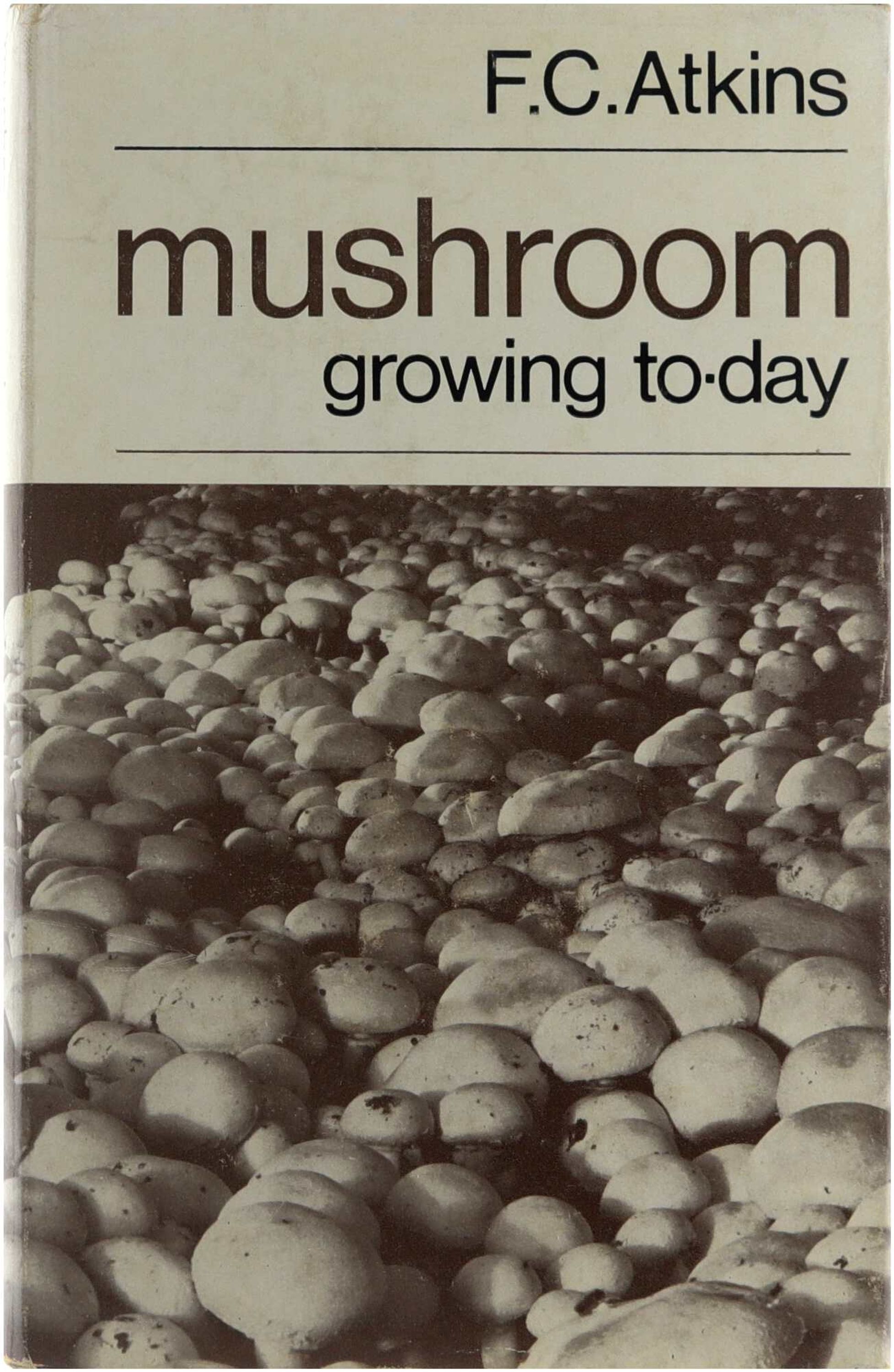
Atkins F.C.
Mushroom, growing today
Artikelnummer 10124621
Mushroom Growing To-day deals comprehensively with every aspect of mushroom cultivation, whether in the private garden, at the nursery or at the specialist farm. It received the highest praise on all sides when it first appeared in 1950. The present edition is the fourth extensive revision, and has been brought fully up to date with the latest research and developments. The author is a member of the International Commission on Mushroom Science, and was Chairman of the four International Congresses held between 1950 and 1960. Managing Director of the Mushroom Research Association Ltd during its entire existence, he was Chairman of the Mushroom Growers’ Association in 1951 and was made a Life Honorary Member in 1953, the only grower in the world to be so honoured. He is also a life honorary member of the Belgian Union Professionnelle des Champignonnistes de Belgique, the French Fédération Nationale des Syndicats Agricoles des Cultivateurs de Champignons, and the New Zealand Mushroom Growers’ Association Inc. He has been intimately involved for the past twenty-seven years in every aspect of commercial mushroom growing, as a grower, spawn-maker, administrator and technical journalist, and is now a private consultant. He is a Director of White Queen Ltd, the mushroom spawn research company. In the 1966 New Year Honours List he was appointed an O.B.E. 'for services to mushroom growing'. With 52 illustrations from photographs and 10 diagrams Contents 1. THE BACKGROUND TO MUSHROOM GROWING What is a Mushroom? The life-cycle of the cultivated mushroom in simple language. Differences between fungi and green plants, and between 'wild' and 'cultivated' mushrooms. Nomenclature. Fairy rings. History of Mushroom Growing Brief history of mushroom cultivation, from first published account in French in 1707, enumerating developments up to 1939. The Mushroom Industry To-day Developments since 1939. The position in 1956. Current difficulties. The Mushroom Growers' Association. Research here and abroad. Advice to the beginner. 2. THE TECHNIQUE OF GROWING How Mushrooms are Grown An outline of the standard procedure for cultivating mushrooms—composting, making beds, spawning, casing, watering, picking and packing. Building a Mushroom Farm An ideal site for a modern mushroom farm. Suggested layout and materials advocated. Heating, ventilating and cooling. Composting shed and store rooms. Composts with and without Horse-manure Types of manure recommended, feed and bedding of horses. Use of gypsum and superphosphate. The scarcity of horse-manure. Synthetic-compost formulae, which dispense with the need for horse-manure. Composting Techniques Orthodox composting procedure; the old-fashioned craftsman's approach. Economizing on space and manure by reducing the composting period. The Lambert & Sinden Methods. The introduction of synthetic composts. The Purpose of Composting and Pasteurization Why do we compost? Rationalizing the process. The value of gypsum. What does pH imply? Why do we pasteurize? Filling Shelves or Trays The importance of the correct degree of compression. The conveyance of compost from the stack to the growing or pasteurizing rooms. Spawns and Spawning Types of spawn. Spawn research. Density of spawning. Temperature. Ventilation. Spawning methods. Casing Why, when and how to case. Peat and Soil. Possible admixtures. Is pH important? Sterilizing Soil or Peat Advantages and disadvantages of sterilizing by live steam (in bins and trays), baking, electricity (immersion and electrode) and chemicals (formaldehyde and chloropicrin). Watering, Temperature and Ventilation Fundamental reasons for watering beds prior to and during cropping. 'Drying out'. Meaning, duration and possible cause of 'flushes'. Ventilation and temperature requirements. The problem of 'stroma'. Humidity. Picking Stages at which mushrooms are picked. Methods employed. 'Trashing' going out of fashion. 3. GRADING, PACKING AND MARKETING Grading, Packing and Marketing Recommendations of the Harding Committee on Grading. Types of package. Canning, quick-freeze and cold storage. New outlets. Washing mushrooms. Sanitation 'Site Contamination'. Importance of a strict routine of sanitation, and details of procedure. 4. DISEASES AND PESTS Major Diseases and Competitors Characteristics, source of infection, prevention and control of the more serious fungi and bacteria acting as parasites or exerting an antagonistic or inhibitory influence on or in the mushroom bed. Minor Diseases and Competitors Notes on a score of minor parasitic and antagonistic fungi sometimes met with in mushroom houses. Fungicides Fungicides and methods of application. Principal Pests Mushroom flies, mites, springtails and eelworms. What they look like and the damage they do. Insecticides and Pest Control Insecticides and methods of application. 5. OTHER ASPECTS OF MUSHROOM GROWING Abnormalities Explanations advanced for abnormal and distorted development of mushrooms. Open Veil. Rose Comb. Inversions, secondary caps, twins, furrows. Patterns of Production The curious rise and fall of production and the possible influence of the weather are recorded. Economics Typical expenditure in detail. Falling prices and rising costs. What capital is required to start a mushroom farm? Food Value Mushrooms as a food. Governmental and medical recognition of their value. Folic acid and anaemia. Cooking mushrooms. 6. MUSHROOMS AS A SIDELINE Mushrooms in Glasshouses A useful 'catch crop' during the winter interval between tomato crops. Growing in rhubarb sheds and underground. Mushrooms for Nurserymen and Market Gardeners The ridge-bed method in the open. Growing under Dutch lights, cloches and 'straw houses'. Mushrooms for the Country Gentleman Mushrooms in the empty cellars of country houses, in disused stables and similar outbuildings. Mushrooms for the Amateur Gardener Mushrooms in lawns, flat-beds, frames, boxes and flower-pots. Bibliography List of works written in the English language on the commercial cultivation of mushrooms. Index Alphabetical index of subjects referred to in the text.
Conditie
Tweedehands - Goed
Taal
Engels
Artikeltype
Boek - Hardcover
Publicatiejaar
1966
Uitgever
London
EAN
9780571068616
pp. 188 / illustrated