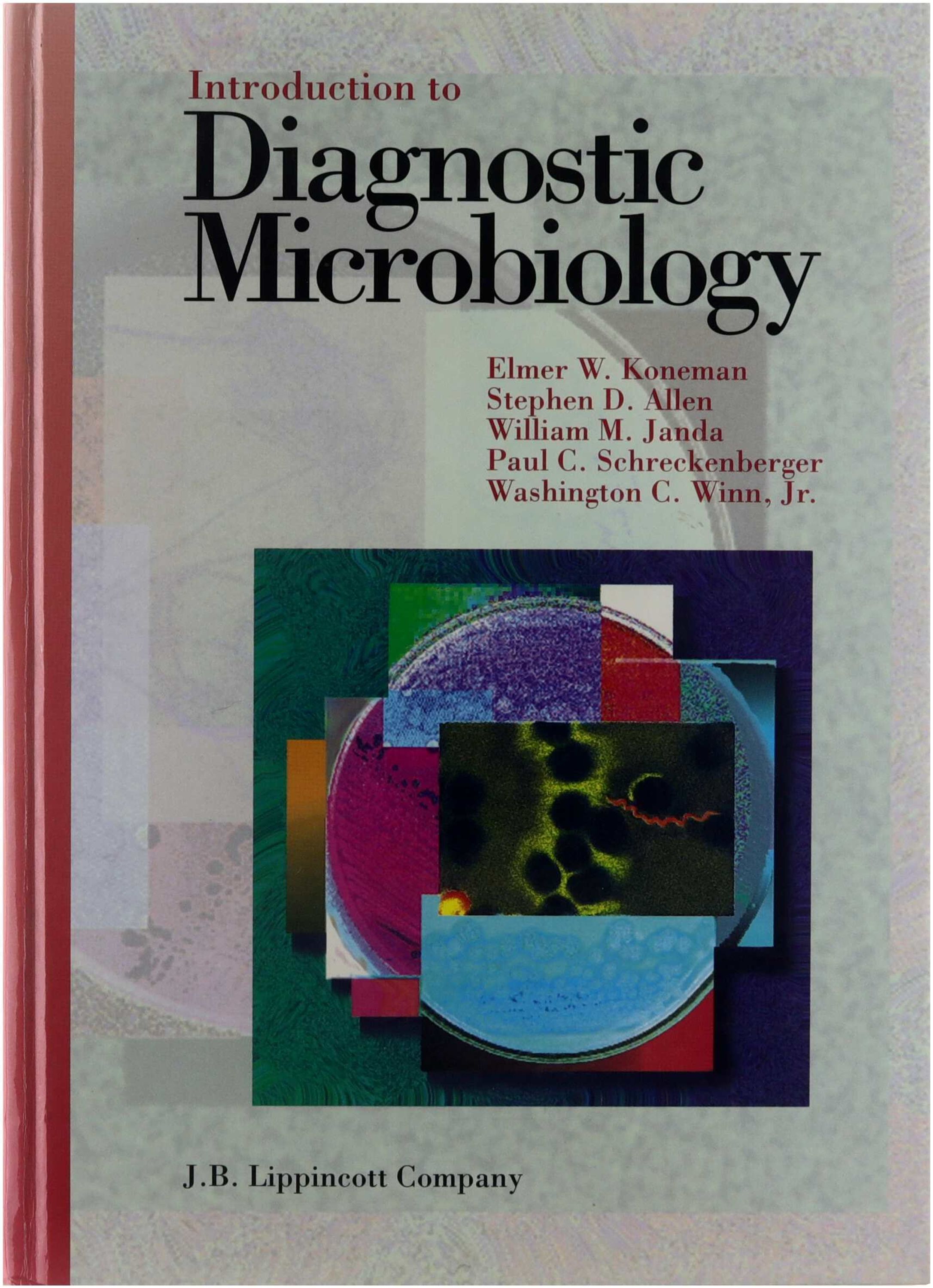
Elmer W. Koneman Stephen D. Allen William M. Janda Paul C. Schreckenberger Washington C. Winn, Jr.
Introduction to Diagnostic Microbiology
Artikelnummer 10125164
Preface The volume of relevant information in diagnostic microbiology has reached such levels that most entry-level students are unable to assimilate it in the time allotted in most course curricula. For fear of leaving something out, authors of scientific texts attempt to include as much information as possible, resulting in treatises that increase dramatically in size from one edition to the next. Not only have many texts become so large that they are impossible to carry in a knapsack, they also include information that exceeds the needs of new students in certain training programs. This problem of too much material is exemplified by the common practice—of students and faculty alike—of highlighting with special pens the information in comprehensive textbooks that they consider to be essential. Therefore, we perceived the need for a text in diagnostic microbiology designed for use by entry-level students, particularly those enrolled in associate degree/medical laboratory technician programs. Introduction to Diagnostic Microbiology might also serve as a valuable resource for information needed by individuals who plan to sit for certification or board examinations. The focus of Introduction to Diagnostic Microbiology is on the clinical microbiology laboratory practices and policies necessary to recover and identify the more important agents of infectious diseases. Although select identification tables have been included in this text when necessary to present the comparative cultural and biochemical characteristics of the more important microbes, it is not intended as a detailed cookbook bench manual. Rather, concepts are emphasized to encourage the development of a fundamental understanding of clinical microbiology. In striving for succinctness, much of the information included in comprehensive microbiology texts must be reduced. However, frequent reference is made to other resources where the student can find additional information beyond that included in Introduction to Diagnostic Microbiology. Chapter 1 covers techniques for the collection and direct gross and microscopic examination of clinical specimens, culture techniques, approaches to the presumptive and definitive identification of isolates, and basic information on quality assurance, risk management, and laboratory safety. Many of the tasks described are in the domain of work performed by laboratory technicians. Chapters 2 through 11, covering the various families and genera of gram-negative and gram-positive bacteria, have the common feature of highlighting the important species within each group. Specifically presented are culture media required for optimal recovery, cultural and biochemical characteristics of the scores of bacteria included in these chapters, and practical approaches to their identification to the level appropriate for clinical purposes. Quick-screening methods for rapid presumptive identification of the important microbes within each genus and species and the use of packaged kit identification systems are also featured. Chapter 12, on antimicrobial susceptibility testing, highlights the various disk diffusion and broth dilution methods used to determine various “drug/bug” profiles. Although the amount of space devoted here to the subspecialty disciplines of mycobacteriology, mycoplasma/ureaplasma, spirochetes, mycology, parasitology, and virology (Chapters 13 to 18) has been reduced from that found in more encyclopedic texts and monographs, the material included is more than adequate for beginning students to assimilate in the amount of time provided in most curricula. Specifically, sufficient information is included in Introduction to Diagnostic Microbiology so that students can formulate a clear picture in their minds of the key characteristics by which the more important microbes can be identified when detected in or recovered from clinical specimens. For example, several composite photographs and illustrated tables have been included for the identification of the important fungal and viral agents that cause infectious diseases. The short chapters on mycoplasma/ureaplasma and the spirochetes focus primarily on the serologic techniques required to make a diagnosis. A brief concluding chapter (Chapter 19) addresses some of the new nonculture technologies, such as various techniques that provide rapid direct detection of microbes or molecular components thereof in biologic specimens. In a time when the trend is toward sprawling, comprehensive texts, Introduction to Diagnostic Microbiology provides beginning students in microbiology with the essentials of a massive amount of old and new information, narrated as succinctly as possible in a single manageable volume. ELMER W. KONEMAN, MD STEPHEN D. ALLEN, MD WILLIAM M. JANDA, PhD PAUL C. SCHRECKENBERGER, PhD WASHINGTON C. WINN, JR, MD
Conditie
Tweedehands - Goed
Taal
Engels
Artikeltype
Boek - Hardcover
Publicatiejaar
1994
Uitgever
J.B. Lippincott Company
Aantal pagina’s
527
EAN
9780397512157
Name stamp.